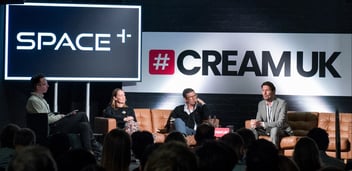
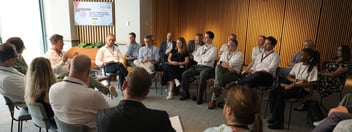
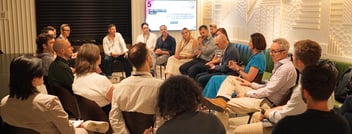
.png)


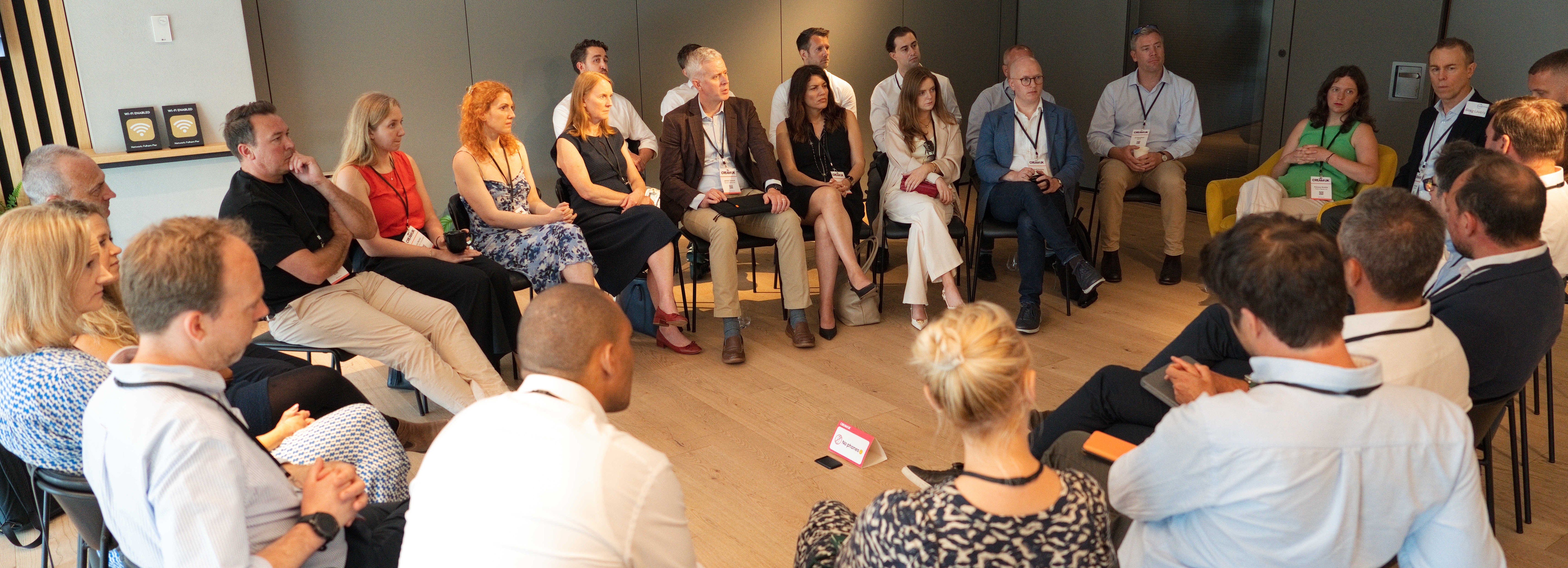
The lease is no longer the relationship - it is only the start of one. The Office Asset Management Tribe at CREAM UK 2026 examined what it means for landlords to move from rent collector to business partner, and where the line sits between genuine partnership and over-promising. The direction of travel is towards space that performs like a service, set within neighbourhoods curated as the real product - but ambition counts for little without the basics, and the question of what to do with secondary stock has no easy answer.
Tribe Host: Andre Bothma (REACH UK)
Co-Hosts: Henry Shearer (The King's Cross Group), Tessa Passey (Canary Wharf Group), Philippa Abendanon (Derwent), Hugo Pickford (Oxford Properties) and Charles Owen (The Crown Estate)
The Shift to Experience-Led Ecosystems
Landlords are moving from providing office space to curating mixed-use ecosystems, and public realm has become the key differentiator - creating value that isolated, in-building amenities cannot replicate. The most successful estates prioritise shared spaces that draw broader footfall and engagement, on the principle that the building is only part of the offer and the neighbourhood is the product.
Operational Basics as the Foundation
Experience counts for nothing without reliability. Despite the focus on premium activations, operational failures - broken lifts, poor HVAC, lapses in cleanliness - quickly negate any value added, and no amount of programming recovers a building where the basics are unreliable. The Tribe was clear that operational excellence is a prerequisite, not an assumption.
Flexibility and Scalability
Flexibility is now a baseline demand. Occupiers expect lease structures that let them grow or contract without disruption, and landlords are responding with modular space, coworking options and turnkey fit-outs that align with occupier business cycles rather than fixed ten-year commitments. The direction of travel is towards space that performs like a service, not a fixed asset.
Talent-Centric Decision Making
Real estate decisions are increasingly driven by HR and people-focused leaders rather than finance alone. The conversation has moved from technical specification to how space attracts and retains talent, which means neighbourhood vibrancy, amenity quality and commute experience now carry as much weight as the building itself. Landlords who have not updated their pitch accordingly are, as the Tribe put it, talking to the wrong people in the wrong language.
Proactive Communication and Responsibility
Long leases suffer from responsibility drift as teams change on both sides. The best-performing landlords maintain proactive, ongoing communication and empower on-site staff to identify and resolve issues in real time, rather than relying on what was agreed at signing. Relationships have to be rebuilt with every new contact, not assumed to carry forward.
Biggest Opportunity: Regenerating Underserved Areas Through Rooted Reuse
The strongest opportunity lies in regenerating underserved areas by repurposing character-rich, underutilised buildings into multi-use community hubs. Done well - with local partnerships and a genuine understanding of civic memory - this model can unlock demand quickly and cost-effectively, creating economic flywheels that benefit community and landlord alike. The Tribe was struck that the most compelling examples were not the most expensive interventions but the most rooted ones, where success came from understanding place rather than out-spending the competition.
Biggest Challenge: The Viability of Secondary and Tertiary Assets
The principal challenge is the viability of secondary and tertiary assets. Retrofitting to meet MEES requirements is costly, and in many locations market demand simply does not support the necessary investment. The risk of stranded assets is real and growing, and the Tribe did not pretend there was an easy answer. For owners holding stock on the wrong side of the quality divide, the economics of upgrade and the realities of local demand remain stubbornly difficult to reconcile.
CREAM UK took place on 23 June 2026 at Fulham Pier, London.
Find out more about the event at space-plus.org/cream-uk