.png)



There is a telling line in PIMCO's outlook for real estate in 2026. Writing about the shift in how returns will be generated this year, their team makes the point that the majority of returns now need to come from the asset itself, rather than from external market forces. Cap rate compression, in other words, is no longer a strategy. The market won't do the work for you.
It sounds like a fairly technical observation. But for anyone who manages commercial real estate for a living, it is something closer to a vindication.
For a long time, asset management has occupied an awkward position in the real estate industry. Investment gets the headlines. Development gets the awards. Asset management - the day-to-day, year-on-year work of making buildings perform, retaining occupiers, managing service charge, improving sustainability credentials, negotiating lease events, curating tenant mix - tends to get treated as the operational layer that sits beneath the more glamorous parts of the business. Important, yes. Celebrated, rarely.
What PIMCO's outlook describes is a market in which that hierarchy no longer makes sense. When the returns have to come from the asset, the people closest to the asset are, by definition, the ones who matter most. The fund manager sets the strategy. The asset manager delivers it.
This shift has been building for a few years. The era of low rates and compressed yields flattered a lot of investment decisions that did not deserve to be flattered, because rising values papered over the gaps. That era is over. What is left is a market that demands genuine skill: understanding what occupiers need, knowing which lease structures create resilience, having the judgement to invest in the right interventions and the discipline to avoid the wrong ones.
PIMCO also flags something that any commercial asset manager will recognise from their own portfolio: the growing importance of social infrastructure and living sectors, the convergence between real estate and infrastructure, and the increasing scrutiny on income quality across retail and office alike. These are not abstract themes. They are the practical questions that asset managers are navigating every day - questions about what kind of space earns its occupiers' loyalty, what kind of retail destination holds its relevance, and what it actually takes to justify a rent review.
These are also, not coincidentally, the questions that CREAM UK 2026 is built around.
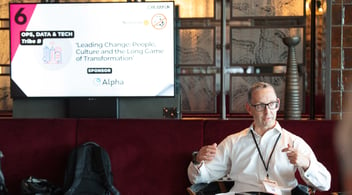
On 23 June at Fulham Pier, 300 Heads of Commercial Portfolios, Asset Management and their allies will gather for a day of candid, off-the-record conversation. The format is deliberately practitioner-led: main stage panels that put the hard questions to the people best placed to answer them, and closed Tribe sessions that allow genuine peer exchange rather than prepared remarks.
The programme this year reflects exactly the conditions PIMCO describes. A main stage panel on what it takes to make space genuinely productive for the businesses inside it. Tribe tracks covering portfolio strategy, retail asset management, CX and leasing, flex and partnerships, and operations, data and technology. Speakers and co-hosts drawn from the portfolios that are setting the standard: Related Argent, The Duchy of Cornwall, The Crown Estate, British Land, Landsec, Canary Wharf Group, Redevco, Legal & General and others.
The PIMCO piece ends with a line that resonates: investors who stay disciplined, focus on secular trends, and manage risk effectively will be best positioned to capture upside potential. The word that carries most weight there is "manage." Not acquire, not develop, not dispose. Manage.
If that is where the value is being made in 2026, it seems worth spending a day talking about how to do it well.
CREAM UK takes place on 23 June 2026 at Fulham Pier, London. Find out more and book your place at space-plus.org/cream-uk